Your opinion is important to us!
Help us improve by filling our quick survey
5
Mins Read
|
December 5, 2025

The demand for transparency is no longer a trend; it's the new standard in luxury. For wholesale jewelers, designers, and retailers, the provenance of a gemstone is as critical as its color and clarity. With the sustainable jewelry market projected to hit $97.8 billion by 2032, securing a verifiably ethical supply chain isn't just a moral imperative—it's a decisive competitive advantage. Yet, navigating the complexities of global sourcing, distinguishing genuine commitment from vague marketing claims, and implementing a rigorous vetting process remains a significant challenge.
This guide moves beyond surface-level definitions to provide a strategic framework for wholesale acquisition. We'll break down the technical criteria, documentation, and partner characteristics that define a truly responsible supply chain, empowering you to make procurement decisions with confidence and build a brand that resonates with today's discerning clientele.
For wholesalers, the stakes are higher than for the end consumer. Your business requires consistency, scalability, and airtight risk management. A robust definition of "ethical" must therefore encompass a multi-layered approach that goes far beyond a simple "conflict-free" label. It's an integrated system of verifiable practices ensuring every stone you acquire contributes positively to its origin.
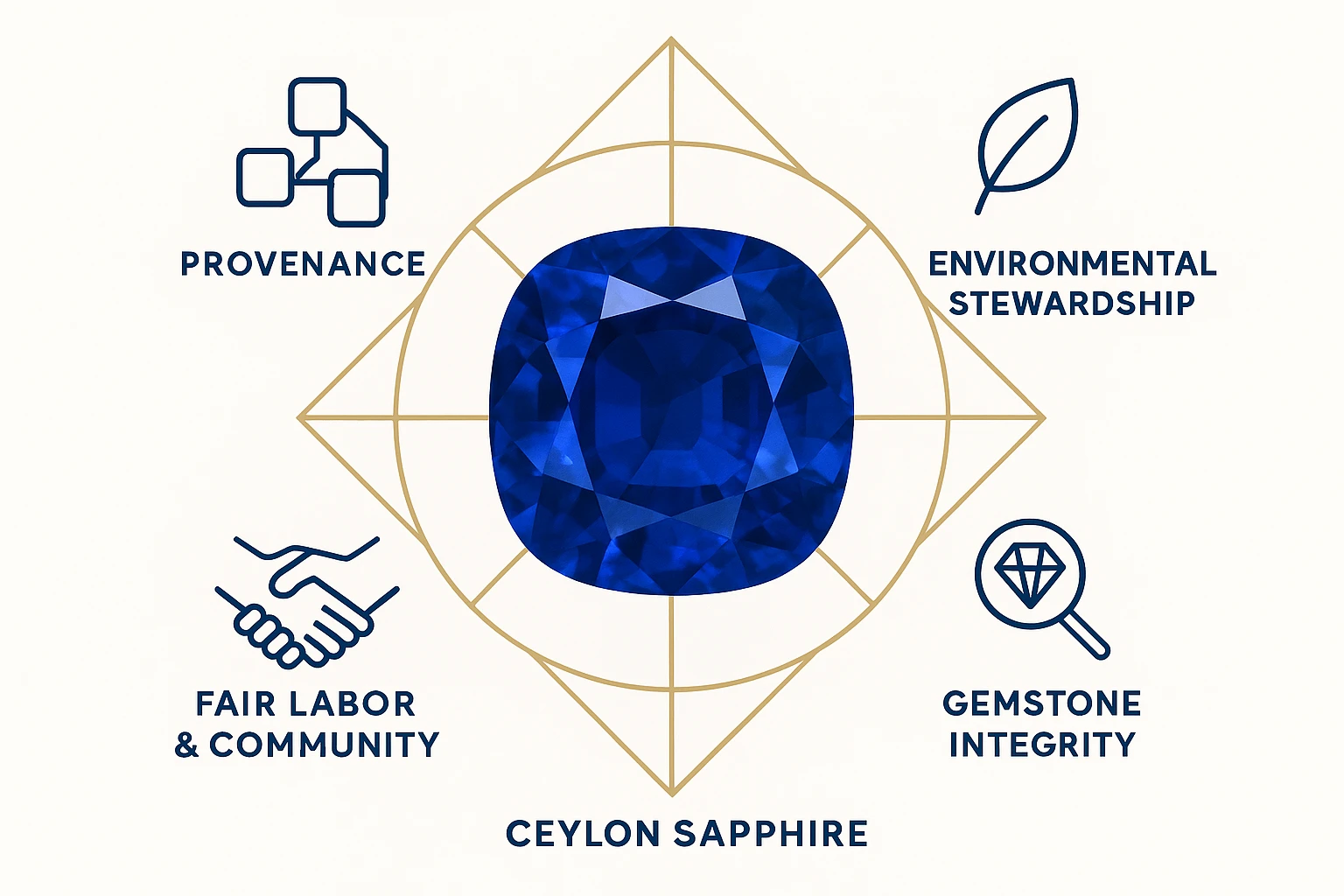
True ethical sourcing is built on four pillars: unwavering provenance, responsible environmental stewardship, fair labor and community empowerment, and absolute gemstone integrity. This is the foundation for building a resilient, reputable, and profitable jewelry business.
General assurances are no longer sufficient. A strategic acquisition process requires a formal evaluation framework. Here is a comprehensive, four-pillar approach to vet any potential supplier and ensure your inventory meets the highest ethical standards.
The story of a sapphire is worthless without proof. Traceability is the non-negotiable bedrock of ethical sourcing, providing an unbroken chain of custody from the earth to your hands.
The method of extraction has a profound and lasting impact on the environment. Discerning between responsible and destructive practices is a critical evaluation point.
An ethical sapphire enriches the lives of the people who bring it to light. Verification of fair labor practices and tangible community investment separates true partners from mere suppliers.
The final pillar is honesty about the stone itself. Full disclosure of any treatments is essential for maintaining trust and accurately determining value.
At Ceylons Munich, our entire operation is built on the four pillars of this framework. We don’t just source sapphires; we cultivate a transparent, ethical, and sustainable supply chain from the ground up.
Our direct control over mining operations and cutting facilities in Sri Lanka allows us to provide the verifiable documentation, environmental stewardship, and community support that wholesale jewelers require. We offer single stones, perfectly matched pairs, and calibrated sapphires, all with a guaranteed provenance that you can pass on to your customers with absolute confidence. We pioneered the "Fine & Fair Sapphires" mission to redefine the industry, ensuring our practices empower communities and protect the environment.
Adopting a rigorous ethical sourcing strategy is not a cost center; it is a powerful revenue driver and brand builder. The benefits are clear and measurable.
As you refine your acquisition strategy, you'll encounter common questions and misconceptions.
Is a 100% ethical guarantee truly possible?

While no supply chain is entirely without risk, a multi-layered verification process built on the four pillars dramatically reduces exposure. The goal is to partner with suppliers who demonstrate a relentless commitment to transparency and continuous improvement, rather than those who offer simple, unsubstantiated guarantees. When jewelers ask, "can sapphires be ethical?", the answer lies in the rigor of the vetting process.
What about lab-grown vs. natural sapphires?
Lab-grown sapphires offer a solution for some ethical concerns but come with their own considerations, including significant energy consumption. Ethically sourced natural sapphires, particularly from small-scale mines, offer the unique advantage of directly supporting artisanal mining communities and providing livelihoods where few other opportunities exist. The choice depends on your brand's specific values and narrative.
How do I build trust with international suppliers?
Trust is built through transparency and consistency. Start by demanding the documentation outlined in Pillar 1. Look for long-term relationships and a willingness to facilitate site visits or provide direct contact with mining partners. True partners welcome scrutiny because they are proud of their operations.
The shift toward ethical sourcing is permanent. For wholesale jewelers, mastering a strategic acquisition framework is the key to unlocking sustainable growth, building an unimpeachable brand, and meeting the demands of the modern luxury consumer. By moving beyond simple claims and embracing a rigorous, evidence-based approach, you can secure a supply chain that is not only responsible but also a powerful asset for your business.
Ready to build a more transparent and profitable sapphire supply chain? Schedule a consultation with a Ceylons expert to explore a partnership built on trust, quality, and verifiable ethics.
Sign up to our newsletter now and get it directly to your mailbox.
CEYLONS | MUNICH stands for the finest Ceylon sapphires. A brand committed to responsible mining of Sri Lankan gemstones obtained in an ethical manner.
Receive unique insights on Ethical Sapphires, Traceability and Gemstone Investment.