Your opinion is important to us!
Help us improve by filling our quick survey

6
Mins Read
|
December 7, 2025

You’ve moved past the basics. You understand the importance of ethical sourcing, and you’re committed to building a business that reflects those values. But now you’re facing a more complex challenge: how do you scale that commitment without diluting it? How do you build a supply chain that is not just compliant, but a competitive advantage?
The answer doesn't lie in going it alone. It lies in building powerful, strategic partnerships.
In a market projected to grow from $97.8 billion in 2025 to an incredible $482.5 billion by 2033, standing out requires more than just a good story—it requires a network of trust. This guide is for the decision-maker who is ready to move from simply sourcing ethical gemstones to strategically collaborating within the ethical ecosystem. We'll break down the practical models that build resilience, amplify your brand, and create real, measurable impact.
When you’re evaluating your options in the ethical sapphire space, you’re likely weighing different approaches. Should you try to manage direct sourcing from multiple small-scale mines yourself? Should you rely solely on third-party certifications? Or is there a more integrated way?
These are the right questions to ask. Jewelers, designers, and ethical brands often struggle with the same pain points: ensuring true traceability, finding a consistent supply of quality gems, and effectively communicating their ethical commitment to a discerning clientele.
A strategic partnership is designed to solve these exact problems. It moves beyond a simple transactional relationship to create shared value, mitigate risk, and unlock growth that is impossible to achieve in isolation. The goal is to find a partner who doesn't just sell you a stone, but who strengthens your entire value chain.
While every partnership is unique, most successful collaborations in our industry fall into one of three primary frameworks. Understanding these models will help you identify the right approach for your specific business goals.
A joint venture (JV) is the deepest form of partnership, where two or more businesses pool their resources to accomplish a specific goal. In the sapphire industry, this often means a wholesaler partnering directly with mining operations or local cutting facilities.
This model is the gold standard for traceability. Instead of relying on fragmented reports from a long supply chain, a JV gives you direct oversight and control over ethical standards at the source. This is the core of how Ceylons operates, ensuring every stone's journey is managed with integrity.
Key Benefits:
Implementing this model requires a partner with established, on-the-ground infrastructure. The focus is on creating a truly shared ecosystem, not just a supply agreement.
You have a powerful ethical story to tell, but reaching the right audience can be a challenge. Co-marketing and co-branding partnerships allow you to pool marketing resources with a like-minded brand to achieve a much greater reach.
This could be a jeweler partnering with a wholesaler like Ceylons to launch an exclusive "Fine & Fair" sapphire collection, complete with co-branded packaging, in-store displays, and a shared digital marketing campaign. The focus is on combining your brand's design authority with the partner's sourcing credibility.
Key Benefits:
While direct partnerships drive specific business goals, involvement in industry associations like the Responsible Jewellery Council (RJC) or the Coloured Gemstones Working Group (CGWG) shapes the entire market. For wholesalers and their partners, this is about playing the long game.
Active participation allows you to contribute to the development of industry-wide standards, network with other ethical leaders, and advocate for policies that support responsible practices. It lends your business a voice in the larger conversation and signals a deep commitment to the ethical movement as a whole.
Key Benefits:
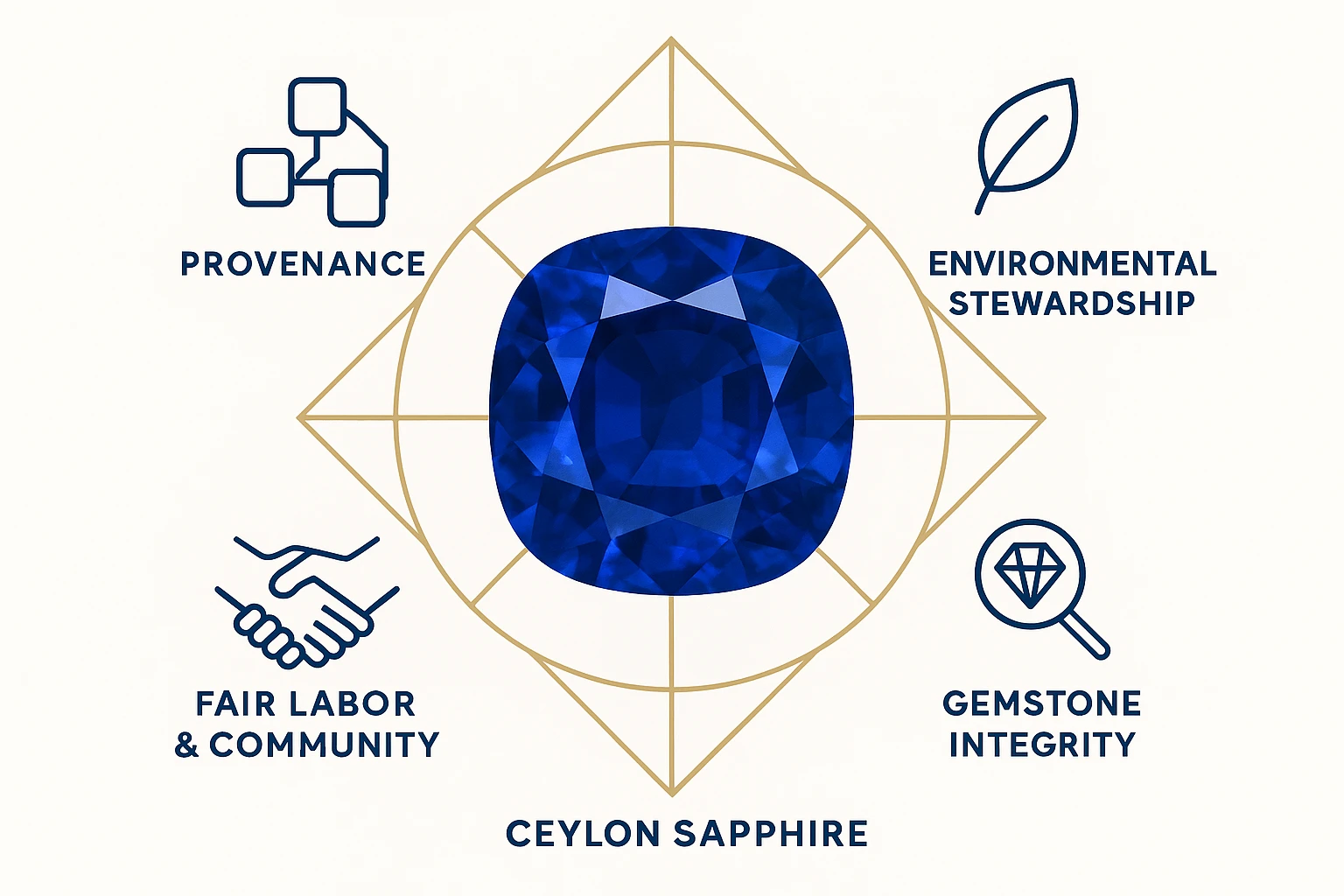
Regardless of the model you choose, every successful partnership is built on a shared set of principles. These are the non-negotiables that ensure a collaboration is both sustainable and genuinely impactful.
As you evaluate potential partners, here are the key questions you should be asking to ensure alignment and reduce risk.
How do I vet a potential partner’s ethical claims?

Look for evidence beyond marketing copy. Ask for documentation, traceability reports, and specific examples of their community initiatives. A confident partner will be able to walk you through their entire process. For more guidance, consider using a framework to assess whether sapphires can be ethical.
What are the tangible financial benefits of these partnerships?
The benefits are clear. You gain access to a growing market of conscious consumers willing to pay more for authenticity. You de-risk your supply chain from scandals associated with unethical sourcing. And through co-marketing, you can achieve a higher ROI on your marketing spend.
Isn't direct sourcing enough? Why formalize a partnership?
Direct sourcing is a great first step, but a formal partnership provides structure, security, and scalability. It defines responsibilities, aligns long-term goals, and creates a framework for joint growth and marketing efforts that a simple sourcing agreement cannot support.
How can partnerships help me with alternative asset investments?
For those looking at gemstones as an investment, a partnership with a source expert is critical. It provides access to investment-grade stones with verified provenance, ensuring their long-term value. When you're considering if sapphires are a good investment, the traceability and quality assurance from a direct partner is your most important form of risk management.
At Ceylons, we have built our entire business model on the power of deep, integrated partnerships. With direct control over our mining operations in Sri Lanka and a network of over 300 jewelers and designers, we don't just supply stones—we build ethical value chains.
Our partners gain more than just access to our portfolio of fine and fair ethical sapphires. They gain a collaborator invested in their success, providing the traceability, stories, and quality needed to thrive in the modern luxury market.
The ethical gemstone movement is being built by those who choose to collaborate. By forging strategic partnerships, you are not only securing a better future for your own business but are also strengthening the entire ecosystem.
Take the next step in your evaluation journey. We invite you to explore our approach and see the difference a true partnership can make.
Explore the Ceylons Munich portfolio to see our traceable, ethically sourced sapphires.
Sign up to our newsletter now and get it directly to your mailbox.
CEYLONS | MUNICH stands for the finest Ceylon sapphires. A brand committed to responsible mining of Sri Lankan gemstones obtained in an ethical manner.
Receive unique insights on Ethical Sapphires, Traceability and Gemstone Investment.